One objective: grids that hold.
Power outages in the United States are getting more frequent and more expensive, driven by extreme weather, by communication systems that were never designed to be attacked, and by a new class of very large, very inflexible loads. GRAIL works on the part of that problem that is tractable from a lab: making grid software smart enough to see trouble early and act on it fast, and making that software small enough to actually run where it is needed.
Our projects are deliberately connected. The digital twin generates the data the learning agents train on; the drone module feeds observations back into the twin; the intrusion detector feeds confidence into the reinforcement learning defender. Each piece validates the others.
01 — Drone-mounted grid monitoring
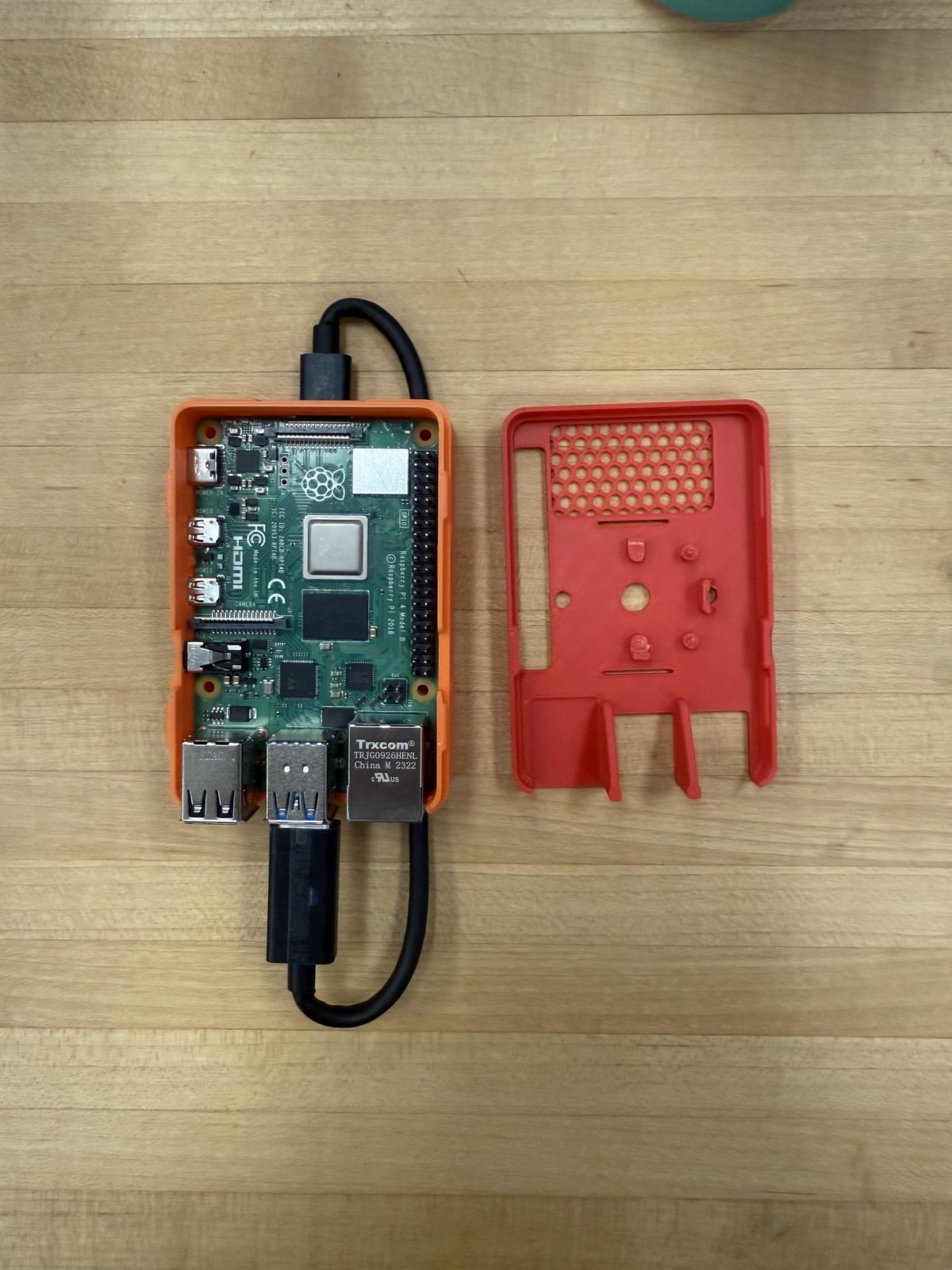
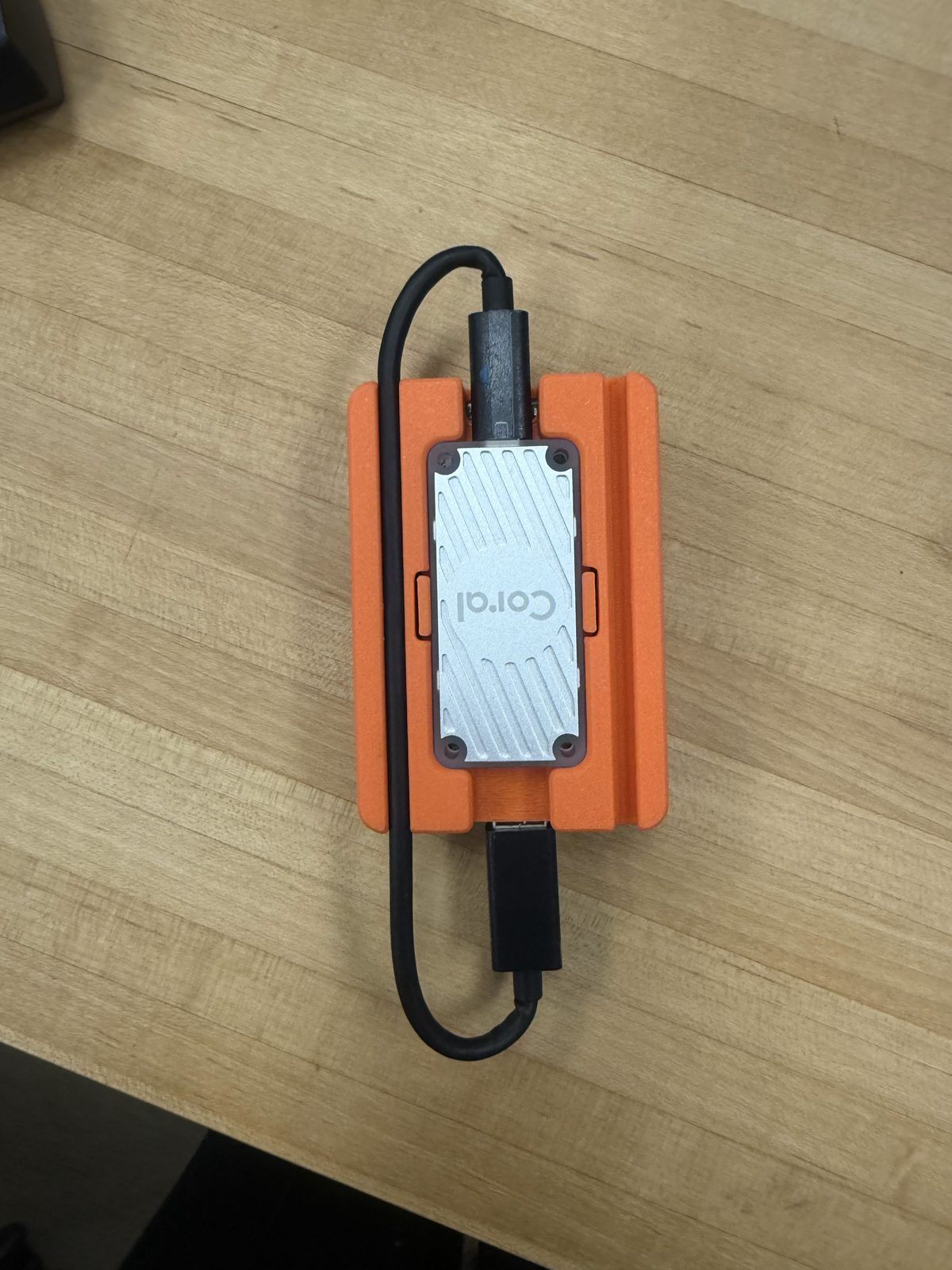
A modular, self-contained AI module that attaches to any commercial drone platform — no custom airframe required, which is what keeps the cost of putting one in the air low. It processes camera data onboard and produces real-time inferences about line condition, rather than shipping video back for offline analysis.
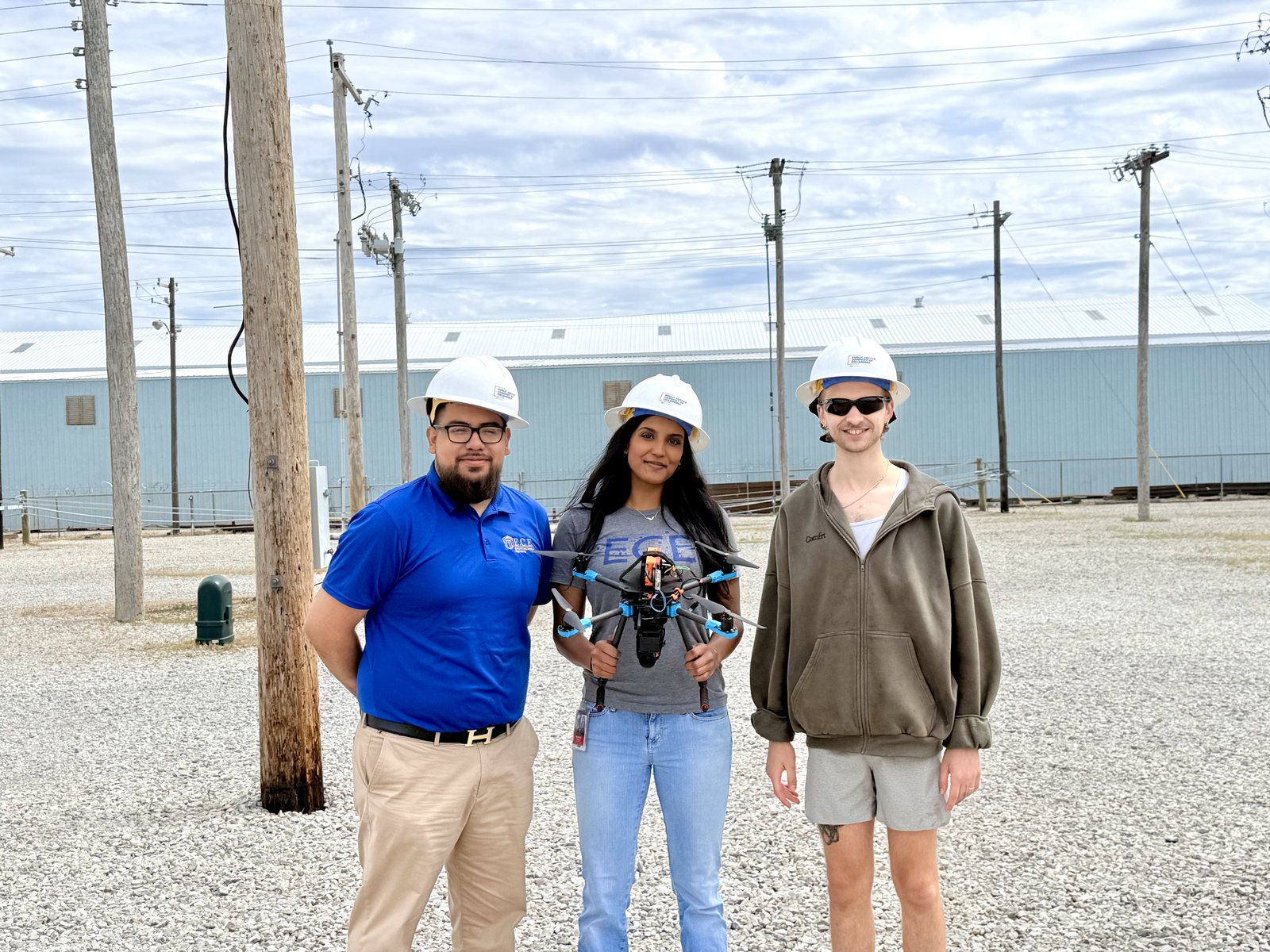
The intended use is post-disaster situational awareness: fly a weather-damaged corridor, identify downed conductors and damage, and GPS-tag a condition map faster than ground crews can physically reach the area — which in turn informs restoration priority.
The module was built as a senior design project with Gwenith Madhan, Wyatt Fulton, and Derek Marin Martinez. American Electric Power authorized testing at its facilities, and the module was flown against a de-energized section of the Public Service Company of Oklahoma network, where condition identification ran on the order of milliseconds. It is an early prototype: it has no EM shielding yet and has only been evaluated in a controlled setup.
- Edge inference
- Computer vision
- Tested at AEP facilities
- Plug-and-play USB cameras
02 — Digital twin of the Tulsa grid
We are building an emulation of the Tulsa distribution network in a virtual environment, constructed entirely from open-source and publicly available information — realistic line lengths, load profiles, and substation configurations.
The point of a twin is to ask questions you cannot ask of a live grid. We are modeling how predicted tornadoes, ice storms, and flooding interact with specific nodes: which segments fail first, how the outage cascades, and what pre-event mitigation would have changed. The goal is a what-if tool that utilities and emergency managers can actually query — what if an EF-3 crosses this corridor?
The twin also serves as the lab's shared data backbone, generating synthetic datasets for our learning agents and a safe environment to validate control policies before they touch anything real. Related earlier work built a virtual replica of a real microgrid for synthetic data generation and an interactive tool where a user specifies a cyberattack and watches its effect propagate.
- Distribution network modeling
- Extreme event scenarios
- Synthetic data generation
- Python-based simulators
03 — Cyber-resilient control of microgrids
Physical resilience alone is not enough. Modern power systems depend on communication links and cloud-facing infrastructure, and energy is consistently among the sectors most affected by CISA's industrial control system advisories. Attackers now also have generative AI to help them build these attacks.
We attack this from two directions. The first is detection, and specifically the detection of attacks nobody has seen before. A supervised detector can only recognize what resembles its training data, which is the wrong assumption for a domain where incidents are rare and the dangerous ones are novel by construction — an attacker who knows what you trained on will build something else. So we work on unsupervised intrusion detection, which learns what normal operation looks like and flags departures from it, rather than learning a catalog of known attacks. Published work in this line includes stealth attack detection in DC microgrids and federated intrusion detection across networked microgrids, together with the insider attacks that threaten it.
The second is response. We develop reinforcement learning agents that act as real-time defenders — learning by trial and error how to restore voltage and frequency while an attack is ongoing, and taking the intrusion detector's output as an additional confidence signal. Trial-and-error learning is risky on real infrastructure, so agents train against the digital twin rather than anything live. Published work in this line includes decentralized RL for dynamic attack response, dynamic resiliency against unknown attack vectors in microgrid security games, and data-driven graph switching for cyber-resilient control.
- Unsupervised IDS
- Deep reinforcement learning
- Game theory
- Graph algorithms
- Federated learning
04 — Noise-resilient microgrid controllers
A controller that only works on clean data is not a controller. We develop deep learning methods that make microgrid control robust to Gaussian noise and to minor cyberattacks by design, rather than bolting detection on afterwards, and we work on deep reinforcement learning for automated PID tuning so that controller design does not depend on hand-tuning by an expert.
A related thread develops hardware-deployable convolutional networks that detect early signs of deterioration in electrical generation facilities, with an emphasis on staying accurate when real labeled training data is scarce — which it always is, because real failures are rare.
- Robust control
- Transfer learning
- Knowledge distillation
- High-performance computing
05 — Energy for AI
Data centers are becoming one of the hardest loads on the grid: large, concentrated, and intolerant of interruption. They stress transmission lines and create thermal problems that the surrounding network was not planned for.
We develop lightweight algorithms aimed at maintaining uninterrupted power supply to data centers under heavy load conditions — the reverse of the usual framing, where AI helps the grid. Here the question is what the grid has to become for AI to keep running.
This work is active but we are keeping the specifics off the site for now.
- Data center power reliability
- Load modeling
- Lightweight algorithms
06 — AI for experiential learning in power engineering
Power system dynamics is hard to teach because the interesting behavior is transient, invisible, and expensive to reproduce. A student can be shown a swing curve without ever developing intuition for what makes it swing.
We are building an interactive framework that pairs simulation with large language models so that students can experiment and get intelligent feedback while they do it. It has three connected layers: a simulation layer that models system behavior, an AI layer that explains and guides, and a user layer that lets students drive the system in real time and see what their choices did.
Douglas Jussaume leads this work. Our first paper on the framework is available on arXiv, led by Cedric Ogiesoba-Eguakun with S M Zia Ur Rashid, Phani Kumar Inkollu, and Rupesh Sah.
- Large language models
- Engineering education
- Interactive simulation
- Power system dynamics
Published results from all of these lines are listed on the publications page.